

2018–2020 HONDA GRACE: A Carimports.co.tz Review
Honda Grace (GM4 / GM5 / GM6 / GM9 Series)
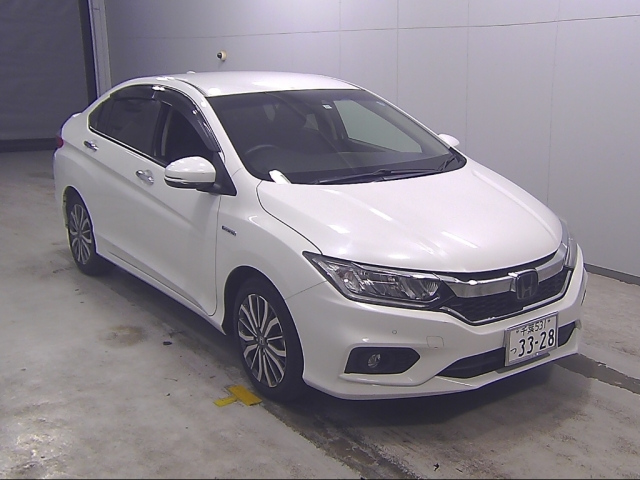
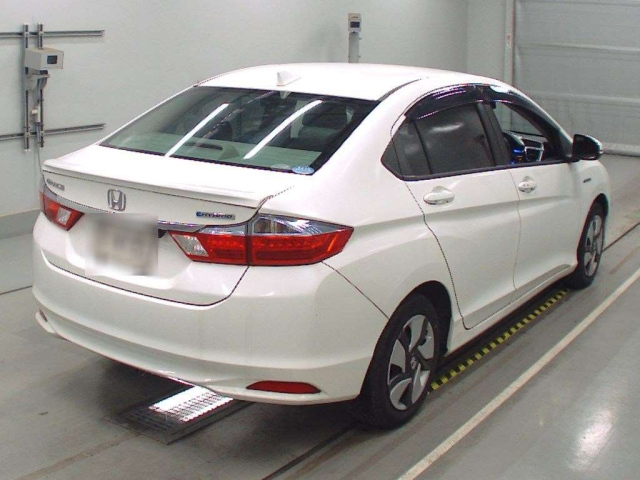
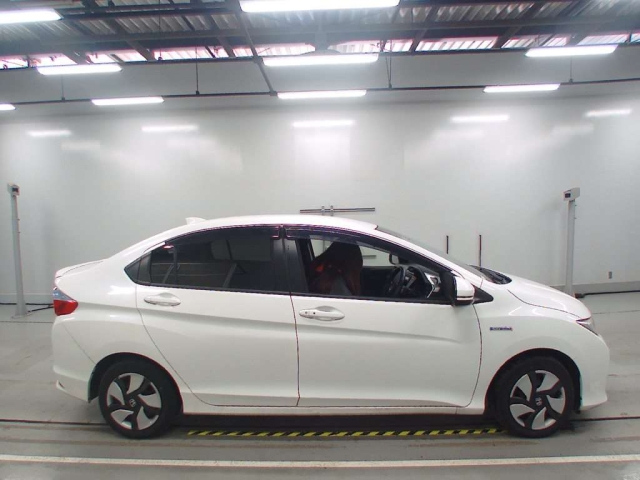
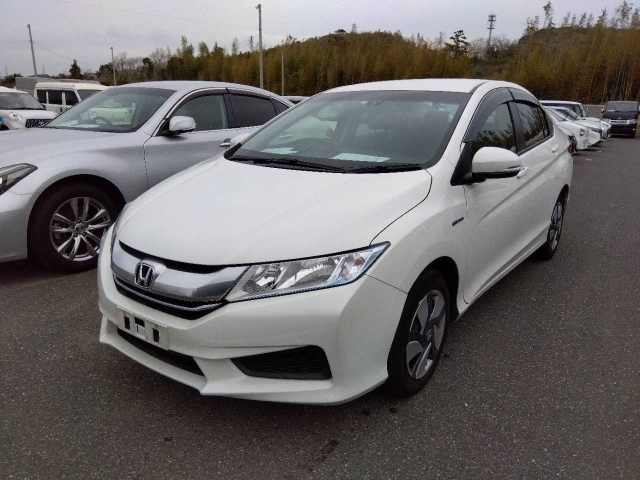
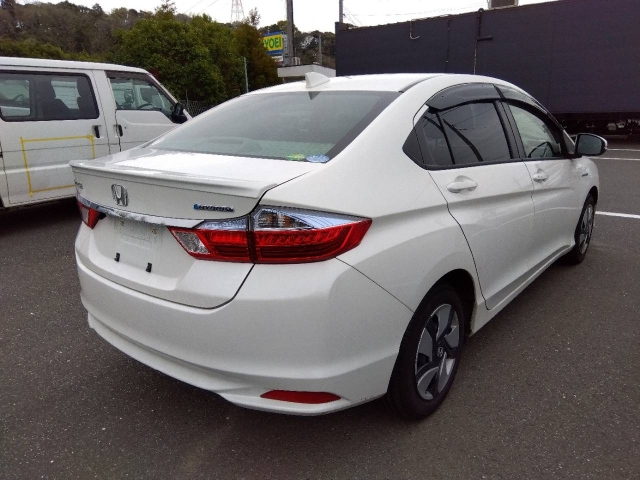
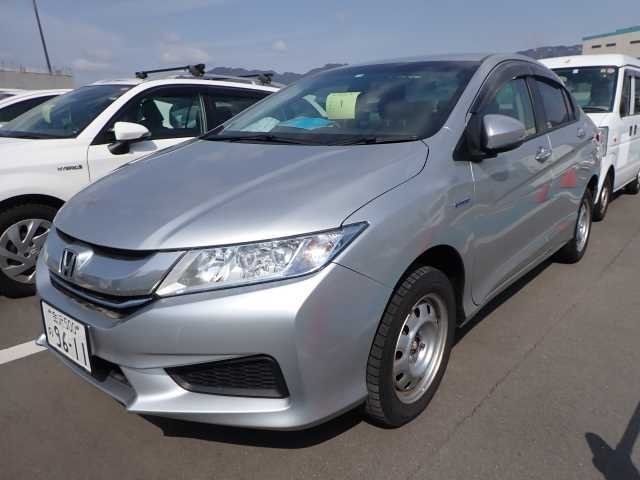
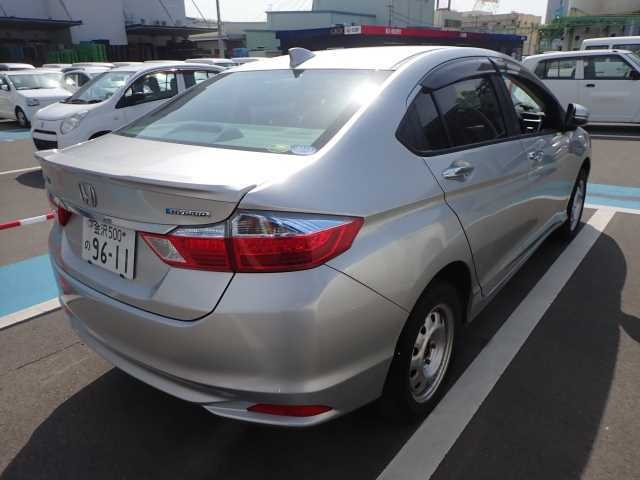
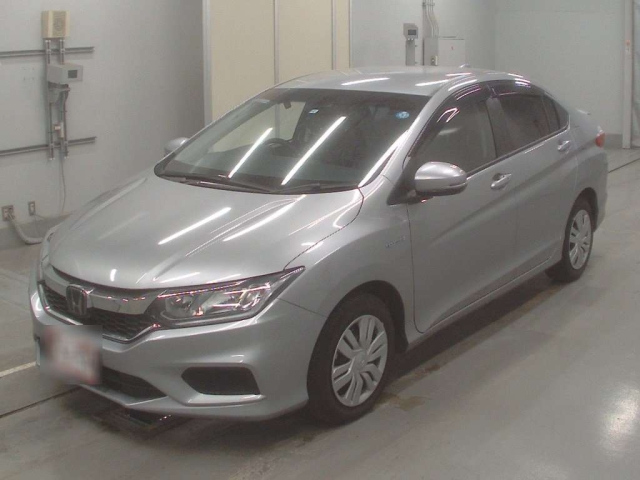
The 2018–2020 Honda Grace is the most fuel-efficient Japanese domestic market compact sedan available to Tanzanian ride-hailing operators sourcing directly from Japanese domestic market auctions, powered by Honda's two-motor Sport Hybrid i-MMD system delivering 26 to 30 km per litre under realistic Dar es Salaam urban conditions — a fuel economy figure so materially superior to every competing compact sedan through JDM channels that it has established the Grace as the preferred vehicle of Tanzania's most commercially sophisticated Uber and Bolt driver-partners who understand that monthly fuel savings directly determine ride-hailing profitability. Sold exclusively in the Japanese domestic market under the Honda Grace nameplate, the vehicle combines the Sport Hybrid i-MMD's electric-dominant drivetrain with the City's practical four-door sedan body and Honda's sub-1500cc excise positioning — delivering hybrid hatchback operating economics in the formal sedan presentation that Tanzania's ride-hailing platforms and corporate booking clients consistently prefer. For Tanzanian Uber and Bolt driver-partners running 150 to 200 kilometres daily in Dar es Salaam, Arusha, and Mwanza, the JDM Honda Grace is the most commercially intelligent sedan procurement available in 2026.
Production History
The Honda Grace entered the Japanese domestic market in December 2014 as a hybrid-focused compact sedan built on the GK-series platform shared with the Honda Fit fourth generation. The Grace initially used the Sport Hybrid i-DCD dual-clutch system before transitioning to the more sophisticated Sport Hybrid i-MMD two-motor system in the 2018 facelift — the system defining the vehicle's commercial appeal in Tanzania's ride-hailing market. The i-MMD system uses two electric motors in a series hybrid architecture where the petrol engine functions exclusively as a generator under most operating conditions, with the driving electric motor providing all wheel torque — delivering the smooth, seamless acceleration of a pure electric vehicle in urban driving while maintaining conventional petrol refuelling convenience.
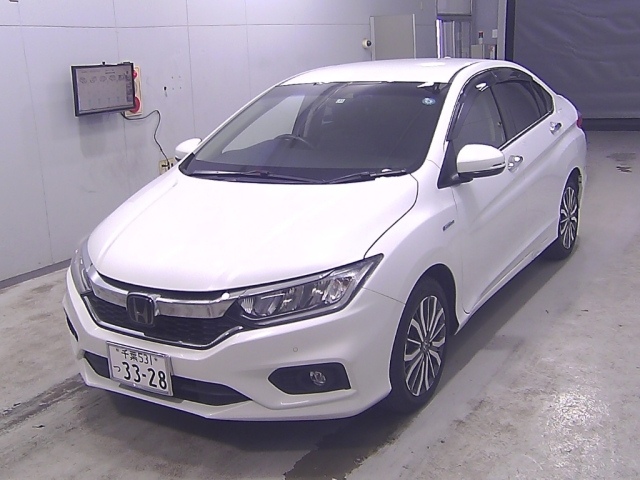
The Grace's June 2017 facelift introduced the i-MMD two-motor system, updated LED headlights, refreshed front fascia styling, and an updated Honda Sensing driver assistance suite on higher-specification EX and EX Honda Sensing variants. The 2018 to 2020 production window covers the post-facelift i-MMD specification exclusively — the most refined and commercially compelling Honda Grace configuration available through JDM auction channels.
Most Popular Model Year/Generation
Within the 2018–2020 production window, the 2019 and 2020 model years are the definitive procurement targets for Tanzanian buyers in 2026. The Honda Grace is classified as a passenger vehicle under TRA regulations — meaning units manufactured in 2018 or earlier trigger the full and catastrophic 25% non-utility age-based dumping surcharge. For a vehicle whose commercial proposition is built on low operating costs, the 25% age penalty directly increases the acquisition cost that must be recovered through daily revenue generation — extending the payback period and undermining the hybrid fuel saving's financial case against conventional sedan alternatives.
The 2019 model year is the absolute minimum procurement boundary — fully penalty-free, delivering the complete post-facelift i-MMD specification. The 2020 model year is the preferred target for dealers building Grace inventory for Tanzania's most commercially sophisticated ride-hailing operators in Dar es Salaam and Arusha where the vehicle's hybrid economy advantages are most quantitatively understood and valued.
Quick Specs
Clearance
130 mm
Tank Size
40 Litres
Power
110 HP (System)
Seating
5 Persons
Engine Options & Model Codes
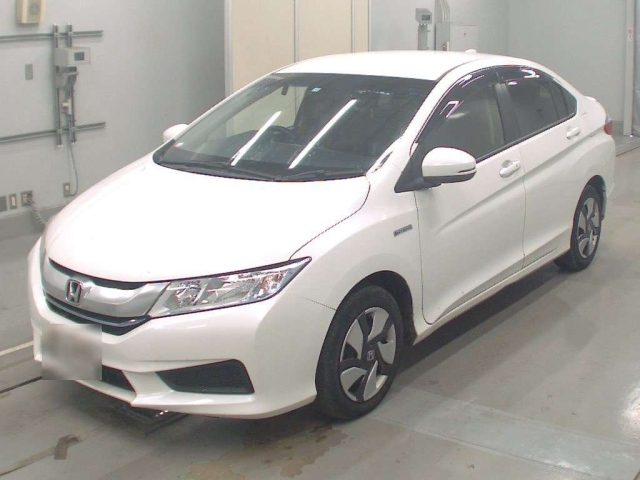
The post-facelift Honda Grace was offered exclusively with the Sport Hybrid i-MMD system across front-wheel-drive and four-wheel-drive configurations. Confirming the correct chassis code on Japanese auction sheets is the single most critical procurement discipline for the Grace — the nearly identical external appearance of the pre-facelift i-DCD variants and the post-facelift i-MMD variants creates a misidentification risk that would deliver a fundamentally different and less desirable hybrid system.
1.5L i-MMD Sport Hybrid — LEB + Two-Motor (Chassis: GM4 / GM5) RECOMMENDED
The GM4 chassis code identifies the front-wheel-drive 2WD i-MMD Grace — the primary recommended procurement target for Tanzanian ride-hailing operators — while GM5 identifies the four-wheel-drive i-MMD variant with Honda's rear electric motor AWD providing additional wet-surface traction. The 1.5-litre Atkinson cycle petrol engine paired with Honda's two-motor i-MMD produces a combined 110 HP and delivers 26 to 30 km per litre under Tanzanian urban conditions — the highest fuel economy of any compact four-door sedan available through JDM channels in Tanzania. The 1.5-litre displacement places the Grace in the sub-1500cc TRA excise bracket. Honda Sensing active safety — collision mitigation, lane keeping, adaptive cruise, road departure mitigation — is standard on EX Honda Sensing variants representing the highest-demand auction target for premium ride-hailing operators.
Pre-facelift i-DCD Variants — (Chassis: GM6 / GM9) — AVOID
The GM6 and GM9 chassis codes identify pre-facelift i-DCD system Grace variants from the 2014 to 2017 production period. Tanzanian importers must explicitly confirm GM4 or GM5 chassis codes on all auction sheets — inadvertently procuring GM6 or GM9 pre-facelift units would deliver the same known DCT motor reliability concerns identified for the Honda Vezel RU2 and would forfeit the superior fuel economy and driving smoothness of the i-MMD system constituting the Grace's primary commercial advantage in Tanzania's ride-hailing market.
Interior & Practicality
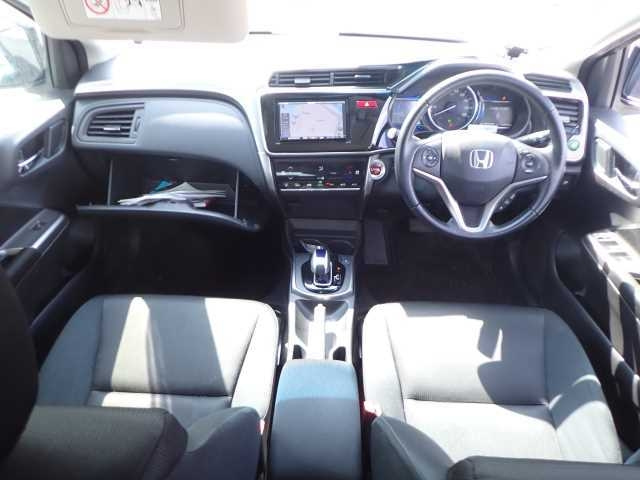
Passenger Comfort: The Honda Grace's interior delivers a cabin environment quietly and consistently impressive relative to its acquisition cost — Honda's characteristic attention to interior ergonomics producing a four-door sedan that ride-hailing passengers in Dar es Salaam and Arusha immediately associate with a competent, professional service operator. Adequate headroom and legroom for occupants up to 185 cm on extended airport transfer and inter-district journeys constituting the highest-value ride-hailing bookings in Tanzania. The i-MMD hybrid system's electric motor propulsion delivers whisper-quiet cabin acoustics under urban acceleration — a passenger experience characteristic that five-star ride-hailing review scores consistently cite as distinguishing Grace operators from conventional petrol sedan competitors. EX Honda Sensing variants arrive with Honda's 8-inch Display Audio touchscreen, premium Honda audio, and the full Honda Sensing driver assistance suite particularly valuable for extended multi-hour shifts on Tanzania's national highway network.
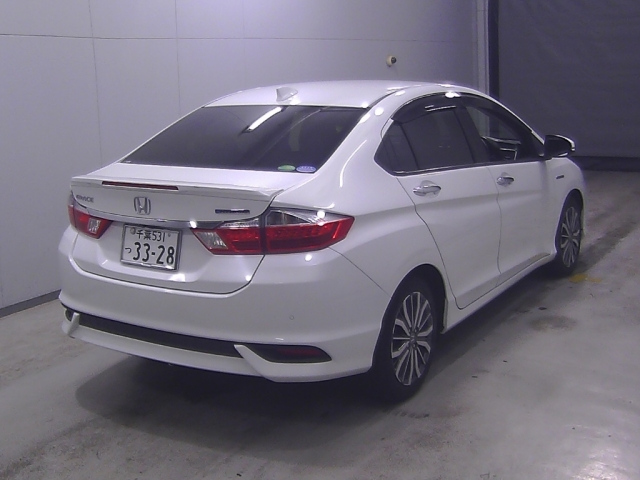
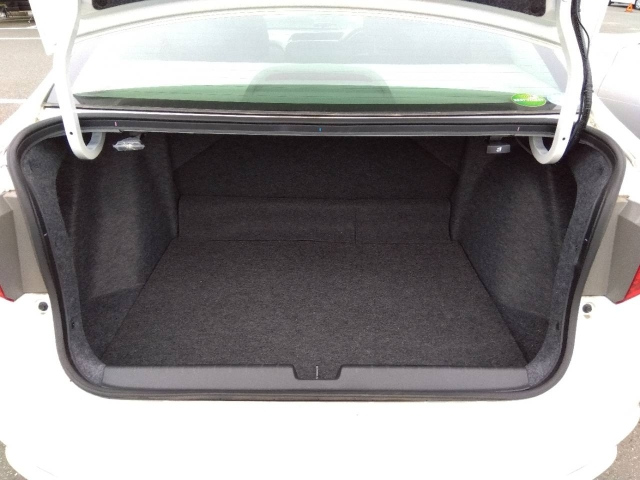
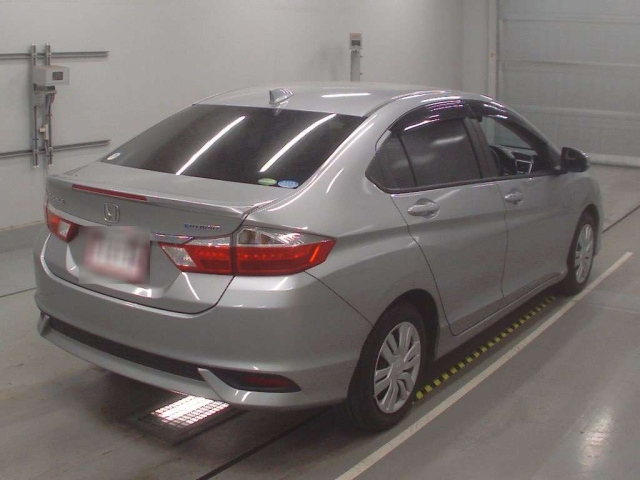
Cargo: The Honda Grace provides 408 litres of boot space — the largest boot volume of any compact hybrid sedan reviewed in this series and a figure meaningfully exceeding the Toyota Aqua hatchback's cargo utility. This capacity accommodates airport transfer passengers with full luggage sets that hatchback competitors cannot, providing the Grace with a commercial advantage in Tanzania's highest-value ride-hailing booking categories. The conventional sedan boot lid rather than full hatchback aperture is the primary cargo access limitation for large or awkward items — but for standard ride-hailing luggage and grocery loads, the 408-litre boot with formal sedan presentation communicates professionalism to corporate and airport transfer booking clients.
Infotainment & Technology
JDM Head Units: Post-facelift Honda Grace units from 2018 to 2020 arrive with Honda's Gathers or Display Audio navigation system on 7-inch or 8-inch touchscreens depending on specification, calibrated for Japan's domestic road database and TV broadcast frequencies — incompatible with Tanzanian infrastructure without modification. Base and L specification variants accept Android navigation units in Dar es Salaam without vehicle-coded installation, while EX and EX Honda Sensing variants require Honda-competent installation to maintain Honda Sensing camera integration and reversing camera feed functionality. Ride-hailing operators should budget TZS 100,000 to TZS 200,000 for a properly integrated Android installation preserving all Honda Sensing functions. FM Band Expander: Required on all JDM units to receive Tanzanian FM radio broadcasts between 87.5 and 108 MHz.
Security: High Risk. The Honda Grace's hybrid premium positioning, growing recognition as Tanzania's definitive fuel-efficient ride-hailing sedan, and the premium scrap value of hybrid catalytic converters — which contain higher concentrations of platinum group metals than conventional converters — make it a high-priority theft target. Catalytic converter theft is endemic on hybrid sedans at unguarded ride-hailing staging areas and residential street parking. GPS-linked ignition cut-off immobilisers, catalytic converter anti-theft brackets, steering wheel locks, and guarded compound overnight parking are non-negotiable security investments for every Tanzanian Grace operator.
Fuel Efficiency & Ownership Costs
Economy: The i-MMD Sport Hybrid returns 26 to 30 km per litre under realistic Tanzanian urban conditions and 22 to 26 km per litre on inter-urban highway routes. The commercial significance for Tanzania's ride-hailing economics is quantifiable: a Grace operator running 180 km per day at 27 km per litre consumes approximately 6.7 litres daily, versus a Toyota Corolla Axio petrol operator at 17 km per litre consuming 10.6 litres — a daily fuel saving of approximately 3.9 litres equivalent to TZS 9,000 to TZS 12,000 per day, or TZS 270,000 to TZS 360,000 per month. Across a 36-month operational cycle, this accumulated saving of TZS 9.7 million to TZS 12.9 million comfortably justifies and recovers the Grace's modest acquisition premium over conventional petrol sedan alternatives.
Minor Service: A standard 10,000 km service interval will cost between TZS 130,000 and TZS 240,000 at Honda's authorised dealer or a reputable independent workshop familiar with Honda hybrid systems, covering 0W-20 full synthetic oil — the LEB Atkinson cycle engine sump requires approximately 3.5 litres — oil filter replacement, air filter inspection, spark plug check at 30,000 km intervals, and i-MMD battery cooling system inspection. The i-MMD system's two-motor architecture has no clutch mechanism, no DCT gear selector, and no variable valve timing solenoids — substantially simpler maintenance requirements and higher service error tolerance than the Honda Vezel i-DCD hybrid. Regenerative braking's brake pad longevity of 80,000 to 120,000 km versus conventional systems' 40,000 to 60,000 km delivers meaningful additional maintenance cost savings for high-mileage ride-hailing operators.
Spare Parts: Standard service consumables are accessible through Honda Tanzania's authorised dealer in Dar es Salaam and developing Kariakoo secondary market support for LEB engine components shared with the Honda Fit and Freed platforms. i-MMD system-specific components — two-motor generator and drive motor assemblies, the Intelligent Power Unit inverter module, and the lithium-ion battery management system — are not stocked locally and require 21 to 45 day ordering lead times from Honda distributors in Japan, Dubai, or Nairobi. The i-MMD system's proven reliability and rarity of catastrophic failures on well-maintained units mean these lead times represent a theoretical rather than frequently encountered practical constraint.
Suitability for Tanzanian Roads
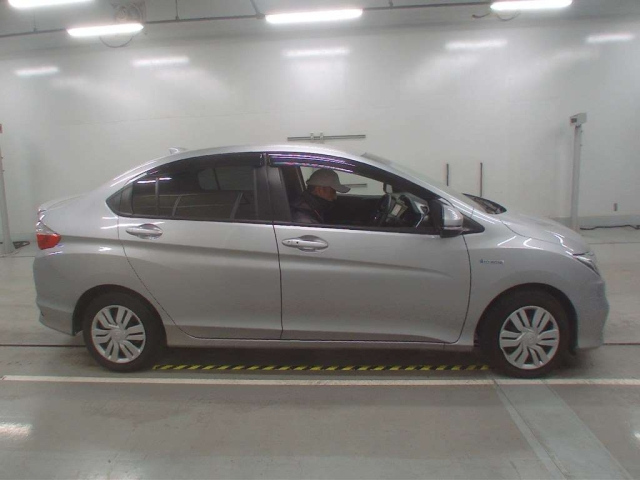
Clearance: The Honda Grace's ground clearance of 130 mm is the lowest of any vehicle reviewed in this entire series — a specification that must be communicated honestly to every prospective Tanzanian buyer. This figure is adequate exclusively for Dar es Salaam's sealed primary commercial road network, the tarmac surfaces of Arusha and Mwanza's main business districts, and the major arterial highways between Tanzania's urban centres. It is completely inadequate for peri-urban secondary residential streets with severe speed bumps, heavily potholed outer suburban roads, any unpaved estate access road, and any rural route. The Grace's low front air dam and the i-MMD battery pack's floor-mounted positioning further reduce the practical clearance margin on uneven surfaces. Tanzanian ride-hailing operators must honestly map their complete operational geography before committing — any operator whose bookings regularly include Dar es Salaam's outer peri-urban residential areas with degraded surfaces should evaluate the Toyota Corolla Fielder or Honda Fit as more operationally appropriate alternatives.
Theft Risk: High. The Honda Grace's hybrid premium positioning, growing recognition as Tanzania's definitive fuel-efficient ride-hailing sedan, and the premium scrap value of hybrid catalytic converters make it a high-priority theft target in Dar es Salaam and Arusha. All anti-theft provisions are mandatory without exception.
Safety & Reliability
Reliability, Ownership & Buyer Guide: The post-facelift Honda Grace GM4 i-MMD has established a strong reliability record in Tanzania's ride-hailing sedan segment, driven by the i-MMD system's inherent mechanical simplicity relative to conventional automatic and CVT platforms and Honda's meticulous manufacturing quality standards. Tanzanian Grace i-MMD operators report operational lifespans of 280,000 to 400,000 km before major powertrain intervention on well-maintained units — rivalling the Toyota Aqua and Honda Fit hybrid in documented longevity.
When purchasing a JDM Honda Grace from Japanese auctions, the single most critical procurement discipline is confirming the GM4 or GM5 chassis code — the nearly identical external appearance of pre-facelift i-DCD GM6/GM9 and post-facelift i-MMD GM4/GM5 creates a misidentification risk that would deliver fundamentally inferior hybrid system characteristics. Following chassis code confirmation, critical pre-purchase inspection points are: i-MMD battery state of health verification using Honda's HDS diagnostic tool — mandatory before purchase given TZS 2 million to TZS 4 million replacement cost exposure on degraded units; the Intelligent Power Unit inverter cooling system condition; Honda Sensing camera mounting alignment on EX Honda Sensing variants; front lower control arm bushing condition; and boot area seal integrity for water ingress. All Honda Grace units must complete mandatory JEVIC or JAAI pre-shipment inspection before the Bill of Lading is authorised under Tanzania Bureau of Standards PVoC regulations.
💰 Honda Grace Price In Tanzania
| Trim Level |
Est. Import Cost |
Showroom Price |
Difference |
| 1.5L i-MMD L — 2018 Model |
TZS 22.0M |
TZS 30.0M |
TZS 8.0M |
| 1.5L i-MMD L — 2019 Model |
TZS 24.0M |
TZS 33.0M |
TZS 9.0M |
| 1.5L i-MMD EX — 2019 Model POPULAR |
TZS 27.0M |
TZS 37.0M |
TZS 10.0M |
| 1.5L i-MMD EX Honda Sensing — 2019 Model |
TZS 30.0M |
TZS 41.0M |
TZS 11.0M |
| 1.5L i-MMD EX Honda Sensing — 2020 Model |
TZS 32.0M |
TZS 44.0M |
TZS 12.0M |
* Prices listed above are average estimated landed costs and asking showroom prices in Dar es Salaam, Arusha, Mwanza, and Dodoma.
Import Taxation Strategy
For Tanzanian importers in 2026, the Honda Grace is classified as a passenger vehicle under TRA regulations — meaning the full 25% non-utility age penalty applies to any unit manufactured in 2018 or earlier. The 1.5-litre LEB engine's sub-1500cc displacement qualifies for the lowest passenger vehicle excise bracket. TRA hybrid vehicle tax incentives may further reduce the excise component, improving the Grace's landed cost competitiveness against conventional petrol sedan alternatives.
| Manufacture Year |
Age Bracket (in 2026) |
Dumping Surcharge |
Market Impact |
| 2020 |
6 Years Old |
0% |
Optimal. Penalty-free with strongest resale value and highest Uber/Bolt operator demand. |
| 2019 |
7 Years Old |
0% |
Optimal. Strategic gold standard — penalty-free i-MMD specification with widest auction availability. |
| 2018 |
8 Years Old |
25% of CIF |
Full passenger age penalty triggered. Extends payback period on ride-hailing economics and undermines hybrid fuel saving's financial case. Avoid entirely. |
* Tanzania Revenue Authority classifies the Honda Grace as a passenger vehicle under HS Code 8703. Base import duty of 25%, excise duty of 5% (sub-1500cc bracket), and 18% VAT apply. i-MMD hybrid variants may qualify for reduced excise duty under TRA's hybrid vehicle incentive framework.
The Ci Verdict
The 2018–2020 Honda Grace i-MMD is the most commercially intelligent compact sedan available to Tanzanian ride-hailing operators through Japanese domestic market auctions in 2026 — a vehicle whose 26 to 30 km per litre fuel economy under Dar es Salaam urban conditions, smooth and silent electric-motor propulsion generating five-star passenger ratings, Honda Sensing safety technology on EX variants, and 408-litre boot providing genuine airport transfer luggage capacity combine to create a ride-hailing operating platform outperforming every competing compact sedan on the two metrics mattering most to Tanzania's commercially sophisticated driver-partners: monthly fuel cost and passenger experience quality. The 130 mm ground clearance is the Grace's most honest limitation and must be matched precisely to the operator's route geography — any operator whose bookings regularly include Dar es Salaam's outer peri-urban areas with degraded surfaces should choose the Corolla Fielder instead. The 25% passenger age penalty makes 2019 the non-negotiable minimum procurement year. Target 2019 EX and EX Honda Sensing GM4 units for the optimal combination of i-MMD fuel economy, penalty-free clearance, Honda Sensing safety, and proven ride-hailing resale demand. Mandate a minimum auction grade of 3.5, confirm GM4 or GM5 chassis code without exception on every auction sheet, mandate HDS i-MMD battery health verification before purchase commitment, and ensure JEVIC or JAAI pre-shipment certification before the vessel departs.
Meet the Rivals
Toyota Corolla Axio Hybrid (NKE165 Series)
The Toyota Corolla Axio Hybrid is the Honda Grace's most direct and commercially credible rival in Tanzania's hybrid compact sedan segment, offering comparable hybrid fuel economy through Toyota's 1NZ-FXE system and the overwhelming advantage of Toyota Tanzania's unmatched upcountry parts and service network. The Axio Hybrid's primary competitive limitation is the i-MMD's superior driving smoothness — the two-motor architecture's EV-dominant urban operation delivers a qualitatively more refined passenger experience — and the Grace's Honda Sensing safety technology suite that the equivalent Axio specification does not match. For ride-hailing operators outside Dar es Salaam and Arusha where Honda Tanzania's service reach is limited, the Axio Hybrid's Toyota infrastructure advantage is decisive.
Check »
Toyota Aqua (NHP10 Series)
The Toyota Aqua is the Grace's primary hatchback-format hybrid competitor, offering comparable 1NZ-FXE hybrid fuel economy in a more compact hatchback body at a lower acquisition cost with Toyota parts network depth. The Grace counters with the formal four-door sedan body preferred by corporate ride-hailing bookers and airport transfer clients, the 408-litre boot's superior luggage capacity, the i-MMD system's superior driving refinement, and Honda Sensing on EX variants. For ride-hailing operators whose booking mix is weighted toward corporate and airport transfer clients where sedan presentation generates a premium fare advantage, the Grace's higher acquisition cost delivers a commercial return through higher per-trip earnings that the lower-cost Aqua cannot match.
Check »